
FloorCarePro / Delhi / Floor Polishing
Floor Polishing in Delhi
Polishing removes the worn, dull top layer of a floor and rebuilds a clean, reflective finish. Across Delhi NCR.
Get a Free Quote ↗Floor Polishing in Delhi
Polishing, done the right way.
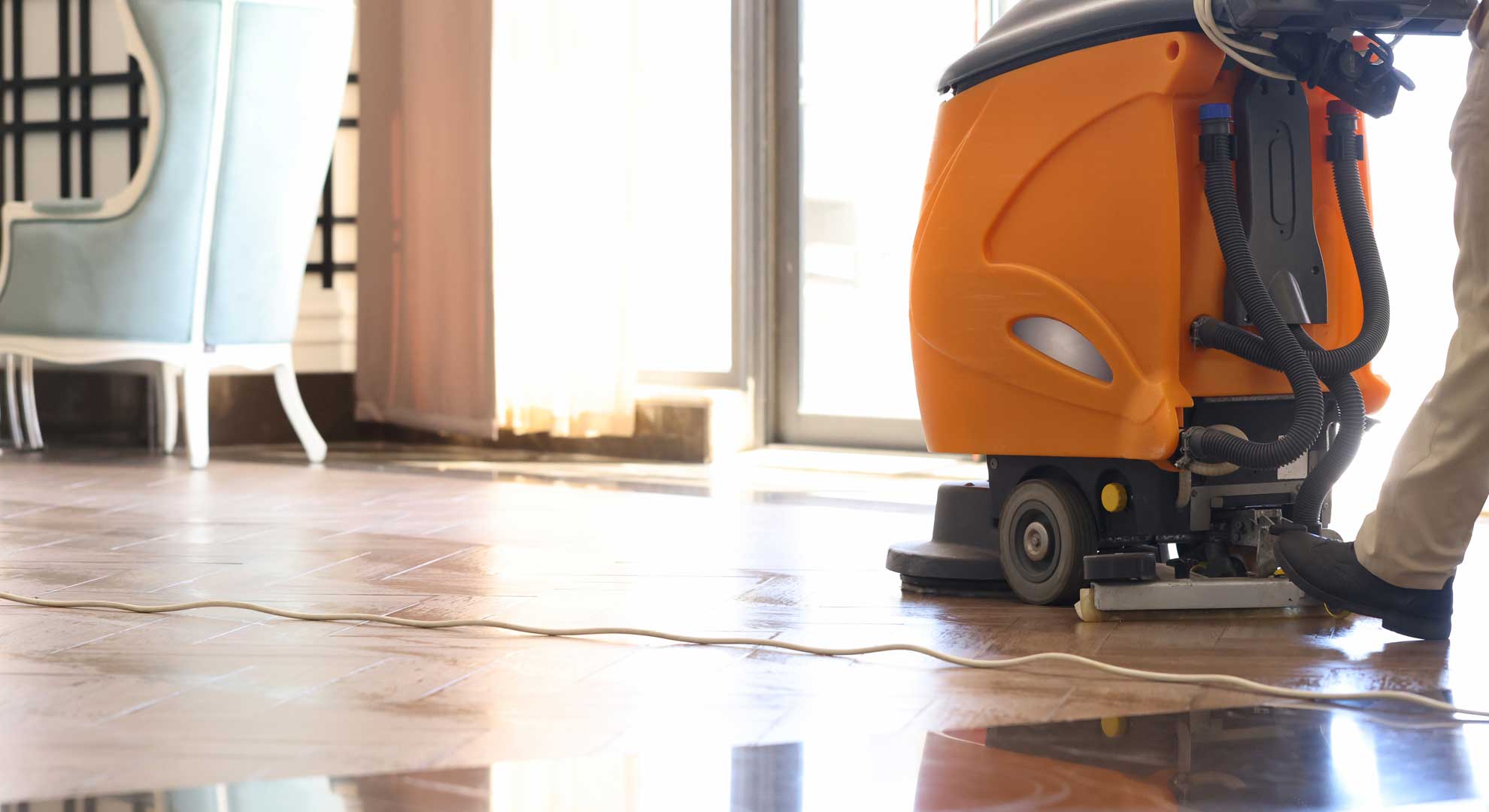
Polishing removes the worn, dull top layer of a floor and rebuilds a clean, reflective finish. On stone and terrazzo that means working through a sequence of diamond abrasives from coarse to fine; on wood it means sanding and re-coating; on resin it means abrading and burnishing or re-coating. The common thread is that the finish is renewed mechanically, not painted on, so it lasts.
In Delhi, dry-season grit and mineral-heavy hard water makes polishing a job worth doing properly and on a schedule, rather than leaving it until the floor is past saving. Polish when the shine has visibly walked off into traffic lanes, when cleaning no longer makes a difference, after building or renovation work, or when a builder-laid floor was never properly finished in the first place.
Delhi has more stone flooring per home than almost anywhere in India — from Makrana marble in Lutyens bungalows to Italian slabs in new Dwarka Expressway towers, granite in kitchens across every colony, and Kota stone on staircases and service areas everywhere. The dry-season dust, mineral-heavy hard water, and large open floor plans mean that flooring here loses its finish faster than owners expect.
Floor Polishing by surface
Which floor do you have?
Marble Polishing →
Because marble reacts to acid, even weak ones — lemon, vinegar, wine, many household cleaners — leave dull etch marks that no amount of buffing removes.
Granite Polishing →
Granite's hardness means it holds a polish for years, but also that restoring it needs finer, harder diamond abrasives than marble and more passes to lift the shine.
Kota Stone Polishing →
Kota is hard and slightly porous, with natural pin-holes and colour variation from green-grey to brown.
Vitrified Tile Polishing →
Vitrified tile is very hard and nearly non-porous, so the tile face rarely stains — but the cement grout between tiles is porous and does.
Ceramic Tile Polishing →
The ceramic tile body is porous but sealed by its glaze; problems concentrate at the grout and at any spots where the glaze has crazed or worn.
Wooden Floor Polishing →
Wood moves with humidity, so timing and acclimatisation matter, and the wear layer on engineered boards is finite — sand it too many times and there is nothing left.
Terrazzo Polishing →
Terrazzo behaves like the stone it is made of — the marble chips etch with acid, the cement matrix is porous and can dust or crack.
Sandstone Polishing →
Sandstone's open pore structure is the whole point — it grips underfoot and looks natural — but it means aggressive cleaning erodes the surface and film-forming sealers peel.
Epoxy Flooring Polishing →
Epoxy is a coating, not the slab — so restoration is about the coating's condition: is the gloss just worn (burnish), is the top coat tired (re-coat), or has it lost adhesion and needs stripping back (partial re-lay).
Concrete Floor Polishing →
Concrete dusts because its surface is soft and porous until it is mechanically ground and chemically densified — a topical coating alone just delays the problem.
Mosaic Floor Polishing →
Mosaic tiles are usually a thin, hard cement-and-chip wear layer, so cleaning has to be firm enough to shift old wax and grime but not so aggressive it eats through the pattern.
The process
How floor polishing works.
Step 01
Assessment
We identify the material, measure the area, and check hardness, wear depth, damage and moisture so the right grit sequence and products are chosen.
Step 02
Grind / cut back
Coarse diamonds (or a sanding cut on wood) remove scratches, etch marks, old coatings and unevenness down to sound surface.
Step 03
Hone
Progressively finer abrasives erase the previous marks and flatten the whole floor to one uniform plane.
Step 04
Polish & buff
Fine compounds and pads build the shine — satin, semi-gloss or full mirror — and a final buff lifts residue to peak clarity.
Step 05
Seal / coat
An impregnating sealer (stone) or protective coat (wood, resin) locks in the result and makes routine cleaning easier.
Across Delhi
On your schedule, in your area.
Our Delhi teams cover the whole NCR with no travel charge inside these areas. Society and apartment work is coordinated with the RWA and facility manager for material access and lift use; farmhouse and bungalow jobs are scheduled to work around your household. Every job finishes with sealing, because Delhi's hard water films unsealed stone within months.
Areas: South Delhi · Central & Lutyens Delhi · West Delhi · Dwarka & the Airport belt · East Delhi · The farmhouse belt.
Frequently asked questions
Common questions, answered.
Which areas do you cover for floor polishing in Delhi?
All of Delhi NCR — South Delhi; Central & Lutyens Delhi; West Delhi; Dwarka & the Airport belt; East Delhi; The farmhouse belt. No travel charge within these areas.
How long does floor polishing take?
A typical 1,000–1,500 sq ft home takes one to two days. Floors needing full grinding, or larger commercial areas, take longer. We work room by room so the rest of the space stays usable.
What does floor polishing cost in Delhi?
It is priced per square foot and depends on the floor material and its condition. After a free measurement at your address you get a fixed written quote — no hidden extras.
Floor Polishing in Delhi